
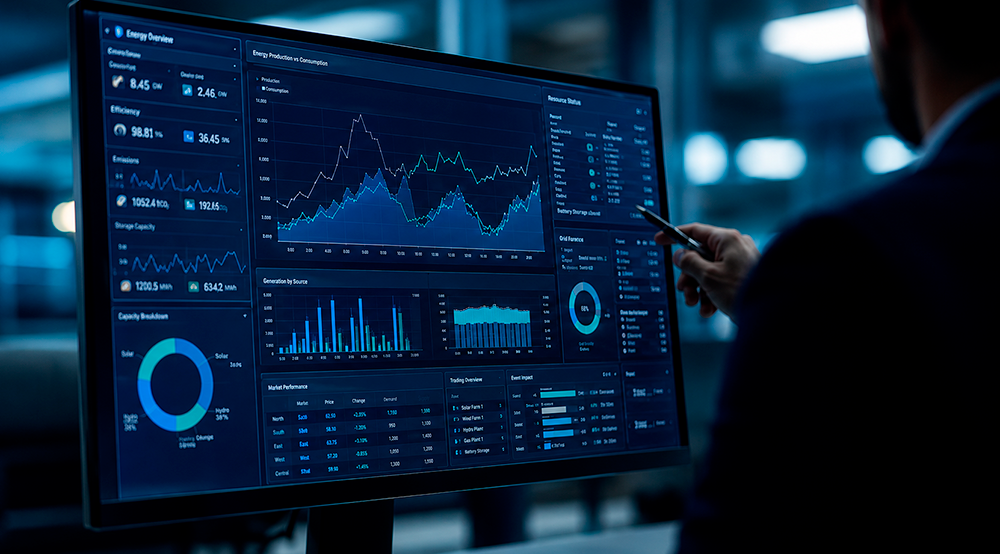
Energy is no longer monitored only when the bill arrives. With the advance of digitalization, data, smart metering and technical analysis are playing an increasingly important role in the way companies monitor consumption, identify opportunities and make decisions with greater confidence.
Energy is no longer being analyzed only through the bill
For a long time, companies’ relationship with energy was highly reactive. The bill would arrive, the amounts would be checked and, whenever there was an unexpected variation, the search for explanations would begin.
This model still exists in many organizations. But it no longer reflects the reality of an electricity sector that is increasingly dynamic, technological and data-driven.
In 2026, digitalization has been gaining ground as part of a broader movement to modernize grids, metering systems and the way consumers, utilities and companies deal with energy information.
Brazil’s Ministry of Mines and Energy has established guidelines for the implementation of smart metering systems, with a minimum additional installation target of 2% per year of consumer units in concession areas, over a 24-month period. The measure is part of a gradual strategy to digitalize distribution grids.
At the same time, ANEEL opened a public consultation to discuss the modernization of metering systems, addressing topics such as efficiency, information quality, better use of energy resources and greater consumer participation in managing their own consumption.
In practice, this movement points to an important shift: energy is beginning to move beyond being seen only as the final amount on the bill and is also being analyzed as data, behavior, history and an opportunity for management.
What changes when energy is measured more intelligently?
Digitalization provides a more detailed view of consumption. Instead of looking only at the consolidated result at the end of the month, companies are better able to understand when, how and where energy is being used.
This may involve smart meters, sensors, automation systems, monitoring platforms, analytical reports and tools capable of turning technical data into useful information for decision-making.
In business operations, this type of monitoring helps answer questions that are often hidden within the electricity bill:
Why does one unit consume more than another?
At what times is demand higher?
Are there recurring sources of waste during certain periods of operation?
Is the consumption profile aligned with the contracted strategy?
Are there efficiency opportunities that have not yet been mapped?
When this information becomes clearer, energy is no longer just a financial check. It becomes part of the company’s control routine.
From reaction to anticipation
One of the main benefits of digitalization is the ability to anticipate problems.
In a more traditional management model, many distortions only appear when the bill arrives. By then, part of the impact has already occurred. The company identifies the cost increase, but it is not always able to act in time on the root cause of the problem.
With better organized data and continuous monitoring, it becomes easier to detect deviations before they become consolidated costs. Unusual consumption, changes in demand, shifts in the behavior of a unit or operational inconsistencies can be identified more quickly.
This shift brings energy closer to the logic of other strategic areas of the company. Just as finance, logistics, production and sales work with indicators, energy consumption also begins to be monitored with greater method, history and predictability.
Digitalization is not technology for technology’s sake
Despite the advance of digital tools, the value of digitalization does not lie only in adopting new systems.
Having more data does not, in itself, mean better management. The key point is knowing how to interpret this information and turn it into practical decisions.
A company may have access to measurements, charts, reports and indicators, but still fail to extract real value from this information if there is no technical analysis, regular monitoring and clarity about what needs to be observed.
That is why technology and management must go hand in hand.
Digitalization increases visibility. Management turns that visibility into action.
It is this combination that makes it possible to identify waste, compare periods, monitor consumer units, review strategies, improve internal processes and support decisions with greater confidence.
Companies do not need to change everything at once
Digitalizing energy management does not mean transforming the entire operation overnight.
For many companies, the first step can be simpler: better organize consumption information, analyze bills regularly, monitor indicators, compare historical data and create a more strategic routine for reading energy data.
From there, it is possible to gradually move toward more advanced tools, such as real-time metering, automation, data integration and more sophisticated analysis systems.
This step-by-step path makes digitalization more accessible and more aligned with the reality of each business.
The most important thing is to change the way the topic is viewed. Energy does not need to be seen only as a monthly expense. It can also become a relevant source of information for management.
The role of data in predictability
Predictability is one of the greatest needs companies have when it comes to energy.
In a scenario of significant costs, regulatory changes, new technologies and growing pressure for efficiency, making decisions based only on the previous month’s bill can limit planning capacity.
More consistent data helps build a clearer view of a company’s energy behavior. It makes it possible to understand seasonality, consumption variations, operational impacts and adjustment opportunities.
As a result, management gains a stronger basis for planning, correcting deviations and making decisions aligned with the company’s actual consumption profile.
In the corporate environment, this predictability makes a difference. Energy is not just a bill to be paid. It is a variable that influences costs, operations, budgeting and competitiveness.
The future of energy management will be more digital, but also more analytical
The modernization of metering systems and the digitalization of grids indicate that the electricity sector is moving toward a reality with more information available.
But the real differentiator will not be simply collecting data. It will be knowing what to do with it.
Companies that develop a more structured approach to energy management are able to move away from a reactive posture and toward a more strategic one. This means monitoring indicators, understanding patterns, anticipating risks and identifying efficiency opportunities with greater clarity.
Digitalization does not only change how energy is measured.
It changes how companies understand their own operations.
When consumption becomes data, management gains depth. And when there is management, energy stops being just a line on the bill and starts supporting decisions that are more efficient, predictable and connected to the reality of the business.