
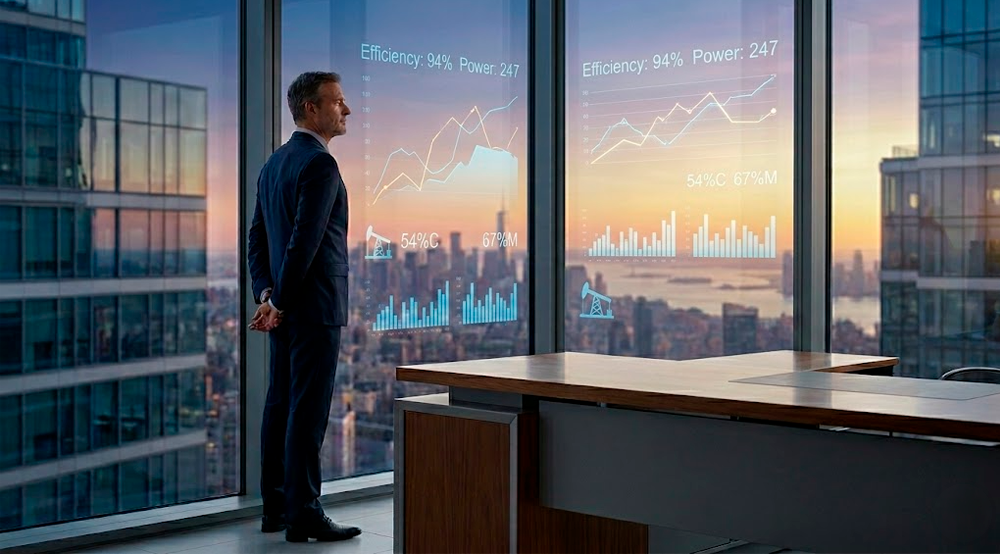
In the Free Energy Market, savings do not come from a ready made promise. They happen when a company understands its cost structure, contracts energy in a way that fits its consumption profile, and turns this topic into a management decision. More than simply paying less, it is about gaining predictability, efficiency, and the freedom to choose what makes the most sense for the business.
Strategic perspective
For a long time, many companies treated energy as just another fixed operating expense. An important one, of course, but still something viewed mainly through the lens of a monthly bill. Today, that perspective has changed.
In a business environment that is increasingly focused on efficiency, predictability, and competitiveness, energy has taken on a more strategic role. That is exactly why the Free Energy Market has become more relevant.
More than an alternative contracting model, it represents a new way of looking at energy costs. One that is smarter, more tailored, and more closely connected to the reality of each business.
Savings begin with understanding
When people talk about reducing energy costs, the first thing that often comes to mind is price. In practice, however, real savings begin earlier, with understanding.
A company’s energy bill is not made up of a single element. There is the cost of the energy itself, the charges related to the use of the grid, and other components that continue to influence the final amount. That is why a sound analysis does not focus on one isolated number. It looks at the full structure.
That is what allows a company to move beyond a generic view and toward a more confident decision.
Where the real savings are
In the Free Energy Market, the key difference is that energy contracting stops following a standardized model and starts reflecting the reality of the business more closely.
This creates room for more efficient energy management, with contracts designed to better match the company’s consumption profile. And when there is alignment, the chances of capturing value increase.
In practice, savings usually emerge when a company brings together a few important elements:
- a clear understanding of its consumption profile
- contracts aligned with the day to day needs of the operation
- a strategic view of timing and terms
- closer monitoring of energy as part of the business
- clarity around everything that makes up the total cost
That is why the Free Energy Market should not be seen only as a way to pay less, but as an opportunity to contract energy more strategically.
More freedom to make better decisions
One of the biggest advantages of the Free Energy Market is freedom of choice.
When a company gains more autonomy to decide how it wants to buy energy, it is no longer tied to a single model. Instead, it can pursue solutions that are better suited to its moment, its operation, and its goals.
That shift matters because it brings contracting decisions closer to the reality of the business. And the more aligned the contract is, the better the decision tends to be.
In the end, sustainable savings do not come from a formula. They come from a well guided choice.
What strengthens a smarter decision
Companies that extract more value from this environment tend to start from a more mature mindset. Instead of asking only how much they can save, they broaden the analysis and look at factors such as the current structure of their energy bill, how consumption behaves over time, which contracting model best fits the operation, what gains can come from greater predictability, and how to monitor that strategy consistently.
This shift in perspective is important because it moves energy out of the realm of automatic decisions and into the realm of management.
When the Free Energy Market makes more sense
Not every company comes to the Free Energy Market for the same reason. Some are looking for predictability. Others want greater competitiveness. Others still see energy as an opportunity to professionalize cost management and make decisions based on stronger analysis.
The positive side is that, when the assessment is made carefully, a company can understand much more clearly whether this is the right time, which model makes the most sense, and where the real gains lie for its operation.
That leads to a decision that is safer, more deliberate, and far more aligned with what the business actually needs.
Energy as a management decision
The market’s maturity has made one thing increasingly clear: energy is no longer just a bill to be paid. It has become a variable that can be managed more intelligently.
For decision makers, that means looking at energy not simply as an unavoidable cost, but as an area where strategy, technical insight, and strong contracting decisions can produce tangible results.
Once that mindset becomes part of a company’s routine, the conversation changes. The question is no longer just “how much does it cost?” but rather “how can we contract energy more effectively to support business growth?”.
In practice
Lowering energy costs in the Free Energy Market is not about a promise. It is about strategy.
Real savings happen when a company understands its operation, evaluates its cost structure, and makes choices that are more closely aligned with its profile. And when that happens, the benefit goes beyond the bill itself. It reaches predictability, management quality, and greater confidence in decision making.
At Deal, we believe energy should be approached in exactly this way: with clarity, closeness, and business perspective. For companies that want to evaluate this path more deeply, that is the starting point for a well grounded decision.